

CHANGING HOW HOSPITALITY DOES SOCIAL

How do you define Pinterest? Is it a social network? The ability to comment, pin and message other users surely makes us think so. A source of inspiration? From pinning wedding dresses to DIY Christmas decorations, we flock to Pinterest to inspire future ideas. However, according to Zoe Pearson, Marketing Manager at Pinterest, we should actually be defining Pinterest as a “visual discovery tool.” But what exactly does this mean?

Pinterest combines social with search and inspiration, making it a completely unique platform. So, defining Pinterest solely as a social platform will place businesses and marketers at a serious disadvantage and tackling Pinterest the way you might address Facebook, Twitter, or Instagram in a marketing plan would simply be a mistake. Pinterest is an entirely different beast. In order to take full advantage of this platform, it’s essential that you abandon everything you think you know about traditional social media.

It’s important to realize that Pinterest is not about real-time engagement, wordy posts, discussing controversial topics, or connecting with friends from the past. Pinners are forward thinkers, optimists and linear discoverers who focus on the quality of content. Pinterest users leverage the platform to plan, search for ideas, and ultimately make a purchase. And that’s where marketing comes in.
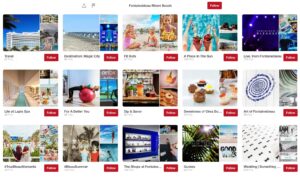
At Social Media Week in London, Pearson discussed the ways in which companies can use Pinterest to elevate their businesses.  She shared that businesses must personalize their content in order to get into the pinner’s mind. Pinterest defines a pinner’s journey as linear because they from one end to the other like magazines. They scan through the content and then hone in on something they want to explore deeper.  It is also important to recognize that pinner’s are planning for the future. Whether they are planning what to eat for dinner or where they want to travel, they plan in advance.

Ultimately, marketers should recognize that Pinterest isn’t a place to drive traffic. It is a space to create and share brand values, and an excellent way to stay relevant in a pinner’s, aka a potential customer’s, mind.
Whether you’re crossing the pond or living life on the highway, a travel game plan is always a must. But take it from us—no matter how many oversized carry-ons you fit on-board or how diligent your pre-departure Google game is—sometimes you win and sometimes you lose when it comes to travel shortcuts.

We turned to BCV’s team of travel experts for their top tips to make your next trip a winner for you, your wallet—and maybe even your Insta feed.

Before you get your head in the clouds.

  1. Get Global Entry. This U.S. Customs and Border Protection program is just $100 for five years, includes TSA pre-check, and you can be expedited at many international customs.

  2. Speaking of customs, save yourself some stress and check out what the process looks like in the country you’re going to. (That carry-on full of snow globes and country-specific Starbucks mugs isn’t going to check itself.)

  3. Be flexible. If your travel dates aren’t set in stone, book your domestic flights on weekdays—it’ll save you some money on airfare.

Put your best *face* forward.

  1. Always travel with an eye mask. Just because you take a redeye flight doesn’t mean you have to look like it.

  2. Add Chill Aromatherapy drops by Alchemy to your bag. If you’re an anxious traveler, dab a few of these drops on your skin, pillow, or eye mask and you’ll relax regardless of your mode of transportation.

  3. Speaking of keeping a fresh face, with travel-sized Sephora sleeping masks, life on-the-go won’t keep away your natural glow.

  4. Pack moisturizing face spray for the plane. Best to be prepared: when you’re traveling, you never know when you’ll have to pose for the ‘gram.

  5. Always have sanitizing wipes on-hand. There’s nothing worse than being sick on vacation—and there’s nowhere with more germs than your cozy airplane cabin.

Mixing, matching—and making it fit.

  1. Go classic. With white tees and dark blue jeans, there’s no need to be an outfit repeater while traveling. (And please, leave your Hawaiian shirt and cargo shorts at home.)

  2. Pack light. If you’re moving from one destination to the next, you’ll thank yourself for leaving behind that third pair of shoes.

  3. Here’s an airtight plan: order a few vacuum sealed bags on Amazon. (Fun fact: sitting on them works just as well.) For $20, you’ll have more room, and you can separate clean and dirty clothes.

  4. If you’re getting down and dirty, kick your dryer desires by traveling with a clothesline—especially internationally. It’s easy to pack and just might be your wardrobe’s MVP.

Not a navigator? No problem.

  1. Before you touch down in your new town, download the Maps.Me app to navigate offline. Download a map for any city and stay on track while you get off the grid.

  2. If you prefer something familiar, we recommend downloading GoogleMaps. You may be covering new ground, but Siri sounds the same—service or no service.

If you remember nothing else…

  1. Always bring a water bottle and snacks when you go on a day trip or tour. You never know what your day will turn into, and hydration always makes for happier explorers.

  2. Do away with checklists. Your vacation shouldn’t feel like a field trip. Let go of the itineraries and live it up as your adventure unfolds.

Culture cheat sheets.

  1. New to a city? Take advantage of free walking tours. Especially in Europe, guides generally work solely on tips, so they’re fun and have great recommendations for local food and attractions.

  2. Download audio guides in advance. Why pay for guided tours of famous sites and museums when you could listen from your own device? (Plus, your earbuds have to look better than the clip-on walkie talkies they’ll give you.)

Livin’ la vida local.

  1. When you’re tired of your tourist ways, WikiTravel is your go-to site. Find hidden gems and locals-only hot spots organized by city.

Keeping tracking of your dough. (Don’t worry, we don’t like sharing bread either.)

  1. Get Splitwise. When you’re traveling with groups, this app lets you plug in expenses like group dinners and tracks who owes how much money throughout your trip.

Let’s face it—in the age of technology, we’re all (more than slightly) addicted to our phones, and we’re okay with that. And at BCV, we’re proficient in finding the best photo-editing, post-scheduling, travel-organizing apps out there to make our lives just a little bit better.

But when we’ve punched out for the day, what apps do we turn to? From budget-friendly flight finders to social marketplaces where we can sell an old IKEA coffee table, we thought we’d share a few favorite apps that are currently making the cut.

Hopper – Hopper is a travel app that lets you search for cheap flights from every airline. Input your desired departure and arrival destination and a calendar will pop up with color-coded squares filled in on the upcoming dates. Green and light orange indicate cheaper fares, and dark orange and red squares are more expensive ones. The genius of Hopper is that you can select your desired dates, and it will advise you on whether you should wait for a better fare or if you should book now because it will only get more expensive. It’s a frequent traveler’s best friend.

Aloe Bud – When you travel a lot for work, it can get a little stressful. Needless to say, a pocket-sized self-care companion could really do wonders when you’re feeling the pressure of a busy week. Enter Aloe Bud, an app that gently sends you helpful reminders to partake in self-care activities, such as hydrate, move, breathe, rest, fuel, or motivate. You can check-in and reflect in real-time or on an as-needed basis; whatever works for you.

FabFocus – Have you fallen deeply in love with portrait mode, but don’t want to shell out half your paycheck for an iPhone 8+ or iPhone x? Say no more. FabFocus uses facial recognition to detect subjects in your photos and blur the background behind, giving you portrait mode-like images. You have to pay $3.99 for the app, but we’d rather pay that than drop a thousand for a new phone.

UNUM – Whether you’re crafting an aesthetic for a client or developing a personal brand of your own, UNUM is the perfect design tool for organizing and managing your Instagram content. Boasting a sleek interface and user-friendly features, UNUM allows you to flawlessly schedule posts, draft captions, rearrange content, and create unique Instagram Stories.

Letgo – They say one man’s trash is another man’s treasure, and that cliché couldn’t be more true for Letgo. A social marketplace allowing you to sell just about anything in the quickest and simplest way. Getting rid of your three-year-old IKEA bookcase? Snap a photo, set a price, and the app will do the rest. Plus, it will show you deals on things in your area, so you’re getting the best items from right around you.

Foodie – Foodie lets everyone capture Instagram-worthy snaps every time. With a variety of filters in different tones, brightnesses, moods, shades, etc., you can frame your photo to fit the personality of the subject. Swipe on the ‘RO3 Romantic’ filter and watch as your phone’s camera switches to a slightly more desaturated, moody setting. A little too much? You can adjust the intensity of the filter to suit your preference.

In the hundreds of thousands of phone apps existing in the world, these are just a select few that currently take the cake at being helpful, user-friendly, and maybe a little addicting? They wouldn’t be on our phones if they weren’t.

To simply say that millennials are driving the growth of the travel industry is an understatement — this group is not only driving it, they are redefining it.

In a survey among BCV’s millennial population, we learned that 70% take more than three vacations per year and 46% will head overseas to explore a new, international destination, showing that they travel much more than their generational predecessors.

Never before have we seen a generation filled with such incredible wanderlust and the drive to make their wildest travel dreams come true. So much so that they tend to prioritize leisure travel over other financial obligations such as buying a home, car or even paying off debt.

If you take a look at the other unique traits of this group, you’ll see that their travel habits closely align with their generation’s defining characteristics. For example, 60% of this group desires adventure travel that will offer new experiences. This is not the group that is just going to sit by the pool and relax, they seek vacations that are culturally enriching, unique and transformative.

And, of course, millennials love to share all of those experience on social media. Among those who took our survey, 52% say they post vacation updates to social media more than three times a day, and 85% said that Instagram is their go-to social network on which to share their travel photos and stories. Considering that capturing the perfect Instagram photo is very important to this group, they are more likely to travel with a companion rather than travel alone.

When it comes to accommodations, millennials prefer the “hidden gems.” Amongst our survey responders, the overwhelming majority book an Airbnb when they travel because this generation prioritizes accommodations that are cool, authentic, and in a local neighborhood versus something that feels generic or touristy.

So, what does this all mean for the hospitality industry? It means that marketing tactics have to change because when speaking to this generation, which represents the largest generation, it is not enough for your marketing strategy to simply inform, it has to inspire. Hospitality brands also have to be transparent, authentic and clearly showcase how their offerings compliment their millennial audience’s desire for independence, authenticity, and exploration.

While this type of marketing may seem like a shift for most, it is a necessary one, because this generation of travel lovers are not going anywhere, and it is very likely that they will pass along their love of exploration to the next generation as well.

There is no denying in this day and age that social media matters. However, without a strategically organized social media vision, businesses are at risk of utilizing the wrong social channels and ultimately failing to communicate overall business goals to the correct audiences. An effective hospitality social media campaign not only increases brand awareness and perception, it also has the potential to drive revenue and increases booking in real-time.

At BCV, we create customized social strategies that align with our hotel clients’ greater marketing initiatives and create original content optimized for social media. By developing a unique, tailored social media strategy, BCV helps hotel clients achieve their individual marketing goals. BCV recently was awarded seven Adrian Awards for exceptional social media campaigns. Two of which honored campaigns created for Waldorf Astoria and the JW Marriott San Antonio Hill Country Resort & Spa.

The Waldorf Astoria has a longstanding tradition of culinary innovation and wanted to reinforce itself as a culinary icon through social media. Therefore, Waldorf Astoria partnered with BCV to drive awareness of the #TasteofWaldorf program, expand the scope of their Taste of Waldorf competition and highlight their global portfolio of properties through a unified social media campaign.

To spread awareness of this campaign, BCV used precise social media targeting to reach affluent middle-aged individuals with an interest in fine dining, culinary travel, and luxury experiences. During activation weeks, live content teased highlights of the Chef’s collaboration on and off property at each of the unique destinations. During the five dedicated immersion weeks, brand social channels unveiled the deeper story of the destinations, properties, local influences, Chefs and finals dishes. Finally, during the event, influencers, partners, press, and esteemed guests generated live content for the brand. This three-step plan established Waldorf Astoria as the birthplace of culinary innovation and reinforced that culinary excellence is one of the brand’s main principals.

JW Marriott San Antonio Hill Country Resort & Spa sought to drive bookings during a key need period, while also increasing awareness and engagement. To do so, the hotel partnered with BCV to create a social-only Facebook offer to incentivize social media fans to book the exclusive offer. Fans had the opportunity to take advantage of a special 96-hour sale to celebrate Christmas in July, encouraging fans to get into the Christmas spirit.

Instagram stories showcased the different Christmas-themed activities guests could take part in during their stay on property. BCV partnered with the property team to determine the geographic area and interest targeting for the campaign based on the people who had booked this period in the past. The social campaign exceeded expectations, driving over 65% of the room nights booked, for a total booking of 995 rooms. Bringing in over $116,000 in revenue, the campaign saw a 155x return on investment.

These two examples of award-winning social media campaigns effectively utilized the correct channels and targeted the necessary audiences to meet and exceed marketing objectives. Although social media gives the hospitality industry the tools to drive awareness and revenue, without an effective strategy, the power of social media cannot truly be harnessed.

They say that a picture is worth a thousand words, which for brands, is especially true when it was taken by someone else.

The use of user-generated content, or “UGC,” by brands has been rapidly increasing largely due to the fact that UGC adds a sense of authenticity to a business’s social content and creates much higher engagement than traditional branded content.

Reposting UGC may not be successful for all industries, but it has proven to be an important tactic for travel and hospitality. In fact, out of 50 active hospitality brands on Instagram, roughly 45% of all content published is UGC. This proves that hotels have experienced the power of UGC and have witnessed that sharing guests’ content increases trust, brand awareness, and engagement.

When hotels utilize UGC, consumers become more involved in their business. It’s a simple strategy that allows marketers to simply “amplify the love,” that consumers share on their own personal social networks and thus draw others to the brand. When customers become involved with a brand, loyalty to the brand will also increase—especially among millennials. In fact, forty percent of Millennials admit that they rely on UGC to inform their own travel plans making it not hard to believe that 72% of users post to social media to share their vacation or hotel experiences.

Put Into Practice 

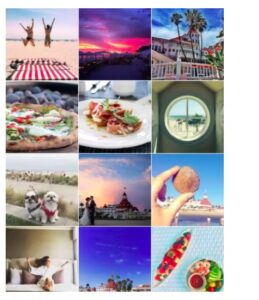
Hotel del Coronado, a client of BCV, wanted to establish their Instagram account as the “go-to” platform for showcasing the property and its offerings, and as a way for the hotel to show appreciation to the local community. By proactively sharing UGC content paired with short and aspirational copy two to four times a week, Hotel del Coronado’s Instagram following grew by over 16K followers in a little over a year and was recognized as one of the top ten most Instagrammed hotels by Condé Nast Traveler.

It’s worthwhile to note that UGC is also extremely cost effective. Instead of having to pay for advertisements or influencers, companies have the option to simply repost content shared by consumers in an effort to share real-time positive experiences. So, not only is UGC a more affordable option, it is also content that is preferred by consumers. Talk about a win-win.

UGC isn’t a panacea, though. Always remember that social is about building and maintaining relationships. In an article published by Skift, Suzanne Cohen, brand director of North American marketing for W Hotels, said: “it’s not just enough for hotels to feature UGC, but it’s crucial to also maintain a continuous dialogue with guests through social media channels.”

The bottom line? People trust people. Hotels are taking advantage of UGC and allowing guests and potential guests to take a peek into another traveler’s genuine experience, not one that is a paid advertisement or a posed marketing shot.